Scoping the Archives: Grassroots Design Archives and Practices in Asia
Presented by Slow Burn Books
Details
Free, no booking required
Level 1 Gallery Space, Asian Art Collection
National Gallery of Victoria, Saint Kilda Road, Melbourne VIC, Australia
Dates
Sat 16 May 12.30 – 1.30pm
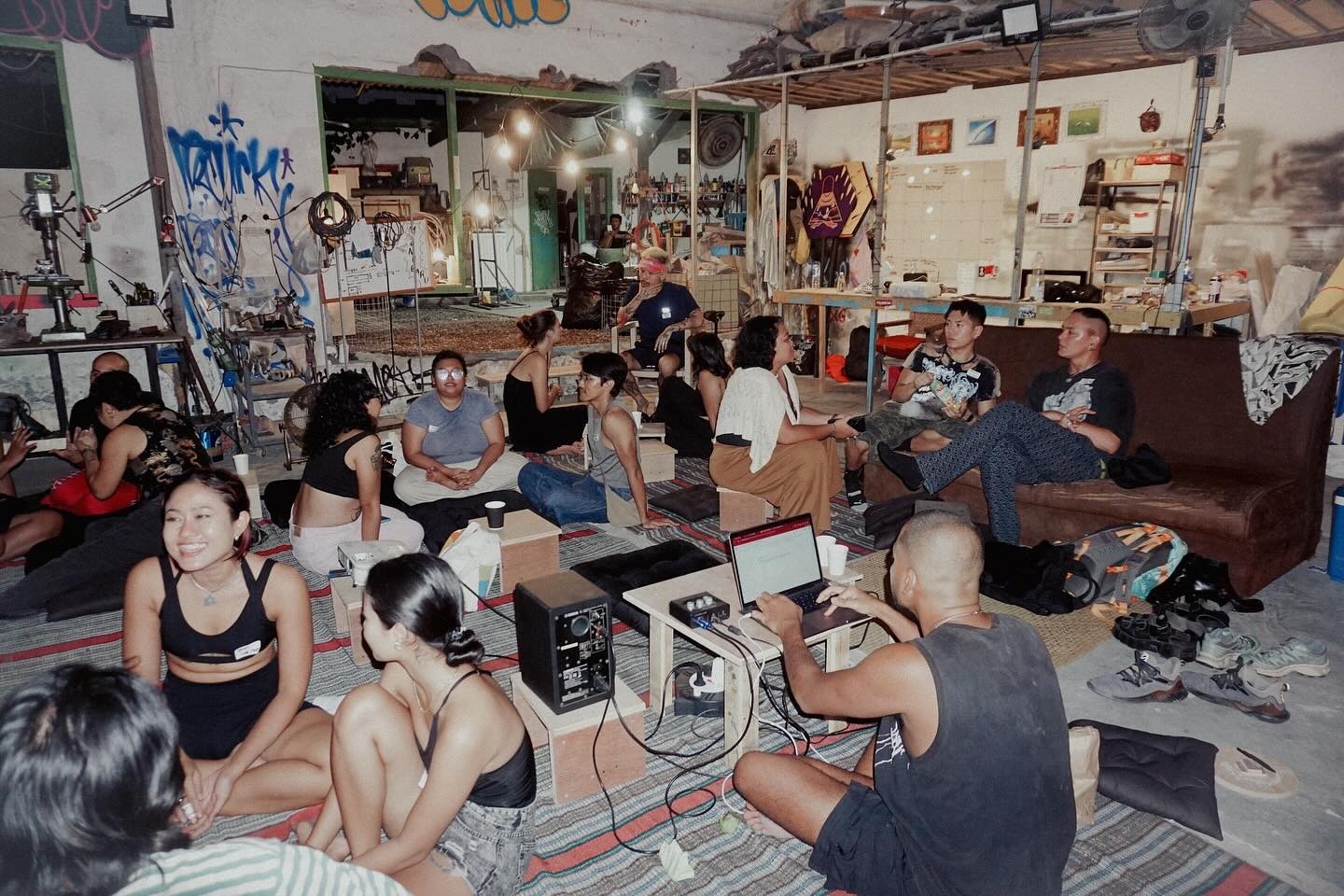
Considering archiving as community action, this event brings together QAMERAD (Indonesia) and Saluhan (Naarm/Philippines) for a discussion exploring independent archival practices in the region, presented by Slow Burn Books.
Re-imagining archives as networks of solidarity, this conversation will discuss archival aesthetics, mobility, iteration and ways of building ethical strategies through independent and queer archiving practice.
Together we ask: “How do we work adjacent to the institutional capture of grassroots archives?”
Participants
Nikki Lam (moderator, Slow Burn Books)
Nikki Lam is an artist-curator and filmmaker based in Melbourne/Naarm and Hong Kong. Working primarily with moving images and text, her work contemplates time, memory and impermanence. Her work has been shown, published and screened across Australia and internationally including Whitechapel Gallery London, Sydney Film Festival, NGV and Art Gallery of New South Wales. Nikki is currently co-director of Hyphenated Projects, co-founder of the art book publisher and bookshop Slow Burn Books and Board Chair at Bus Projects.
MJ Flamiano (Saluhan Collective)
MJ Flamiano is a visual artist, creative producer and arts worker of Anglo and Filipino ancestry, with roots in Luzon and the Visayas. Based in Naarm/Melbourne, she is Creative Director of Saluhan Collective, alongside Catherine Ortega-Sandow and founder Aida Azin. Since 2019, Saluhan has developed exhibitions, workshops and community gatherings grounded in Filipinx concepts of kinship and reciprocity, in partnership with organisations including Arts House and Next Wave. MJ’s practice spans printmaking, artist books, video and installation, exploring cultural sites through critical and playful approaches, alongside her role on the curatorial team at Incinerator Gallery.
Syarafina Vidyahana (QAMERAD)
Syarafina Vidyadhana works across community-led moving image practice, publishing, and cultural foresight. She is the co-founder of QAMERAD, a Bali-based queer cinema collective organising guerrilla screenings and workshops that approach cinema as a tool for communing, resource redistribution, queer archiving, and world-building. She is also the co-founder of Cahyati Press, an independent publishing studio dedicated to underrepresented voices and experimental writing. Her practice is rooted in building independent cultural infrastructures that support alternative knowledge, collective survival, and more generous forms of public life.
Slow Burn Books
Slow Burn Books is an art book publisher and reading room with a focus on Asia and its diaspora. We are dedicated to connecting Asian artists, writers and publishers with Australian audiences. Based in Naarm/Melbourne since 2020, Slow Burn Books has participated in art book fairs around Asia including Tokyo, Kuala Lumpur, Bangkok, Shanghai and Beijing. In 2025, Slow Burn Books published their first photobook with Vietnamese-Australian artist Phuong Ngo titled Inheritance (Di Sản) and launched their Slow Index program with a publishing residency. Slow Burn Books reading room is located in Melbourne CBD, due to open in mid-2026.
Saluhan Collective
Saluhan Collective is the creative collaboration of artists Aida Azin, Catherine Ortega-Sandow, and MJ Flamiano. Since 2019, they have developed a diverse body of work, including exhibitions, events, workshops, community gatherings, and film screenings, in partnership with organisations such as Arts House, SEVENTH, Next Wave, Footscray Community Arts, Testing Grounds, and Siteworks. Their practice is deeply rooted in Filipinx concepts of kinship and reciprocity, with a focus on creating spaces that interweave artistry and community engagement.
QAMERAD
QAMERAD is a Bali-based queer cinema collective organising guerrilla screenings and community-led workshops. Viewing cinema as a tool for commoning, QAMERAD gathers communities to redistribute resources and imagine alternatives under regimes of surveillance and control, privileging opacity and radical aesthetics as strategies for collective survival and queer archiving and world-building.